Skip to content
NOMVEX CONDITIONING · TRX-LUNGE

Rear-foot suspended split squat

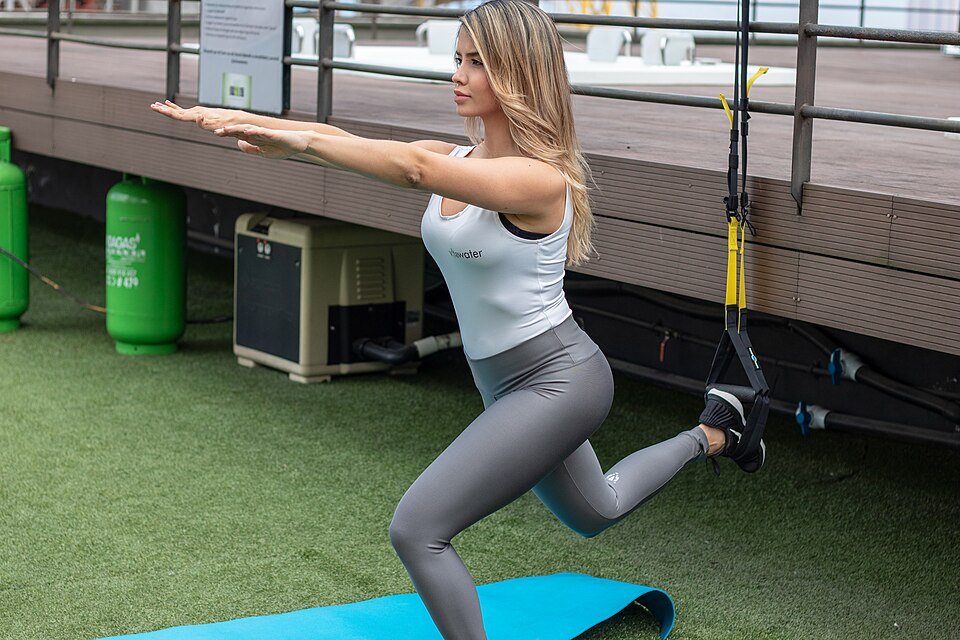
Place the rear foot in a stable suspension strap behind you. Lower the front-leg squat while keeping the knee aligned and the trunk balanced.

One authentic reference photo of the base movement plus three progressively harder session protocols. All levels reuse the same movement photograph — no fake independent actions or image claims.

Your exercise in three steps

Rear-foot suspended split squat

Rear-foot suspended split squat
Rear-foot suspended split squat — PREPARATIONTRX suspension straps supporting rear foot1PREPARATIONTRX suspension straps supporting rear footRear-foot suspended split squat — EXECUTIONPlace the rear foot in a stable suspension strap behind you. Lower the front-leg squat while keeping the knee aligned and the trunk balanced.2EXECUTIONPlace the rear foot in a stable suspensionstrap behind you. Lower the front-legsquat while keeping the knee aligned andthe trunk balanced.Rear-foot suspended split squat — CHECKRepetition depth, limb alignment and movement speed remain consistent.3CHECKRepetition depth, limb alignment andmovement speed remain consistent.

Three vector instruction panels for offline use. The reference photograph is not included.

Rear-foot suspended split squat
Authentic source photo of the base movement, shown uncropped. · PTPioneer · CC BY 2.0
COACH EXECUTION CARD

Rear-foot suspended split squat

Equipment shown or used: TRX suspension straps supporting rear foot

Age: From U15 (light load, technique first); not in U13 plans

Exercise setup and mechanics:

Place the rear foot in a stable suspension strap behind you. Lower the front-leg squat while keeping the knee aligned and the trunk balanced.

Conditioning relevance to volleyball:

Single-leg strength and controlled hip stability for volleyball jumping and landing.

Physical conditioning supports an athlete’s capacity. It is not a disguised serve receive, attack, defense or blocking skill.

TRAINING PROGRESSION · 3 LEVELS

Progressive practice without inflating exercise numbers

Move up only when execution meets the quality checks. Real readiness and technique matter more than a nominal age category.

01 · Technique foundation

Learn movement control

Suggested starting dose

2 sets × 6–8 controlled repetitions per side where applicable

Rest

60–90 seconds between sets

Coaching cue

Place the rear foot in a stable suspension strap behind you. Lower the front-leg squat while keeping the knee aligned and the trunk balanced.

Quality gate

Repetition depth, limb alignment and movement speed remain consistent.

02 · Strength / capacity development

Build repeatable capacity

Suggested starting dose

3 sets × 6–10 technically consistent repetitions

Rest

90–120 seconds between sets

Coaching cue

Place the rear foot in a stable suspension strap behind you. Lower the front-leg squat while keeping the knee aligned and the trunk balanced.

Quality gate

Repetition depth, limb alignment and movement speed remain consistent.

03 · Sport-specific workload

Apply controlled sport intensity

Suggested starting dose

3–4 sets × 4–6 challenging but controlled repetitions

Rest

2–3 minutes between sets

Coaching cue

Place the rear foot in a stable suspension strap behind you. Lower the front-leg squat while keeping the knee aligned and the trunk balanced.

Quality gate

Repetition depth, limb alignment and movement speed remain consistent.

SAFETY & INDIVIDUALIZATION

Quality first, not maximum load

External loading requires appropriate technique, equipment, experienced supervision and a player-specific plan. Never test maximal loads in an unsupervised youth session.

Doses are coaching examples, not individual prescriptions. Adapt for readiness, fatigue, injuries and any relevant medical advice.

Nomvex Volleyball