PHYSICAL CONDITIONING

Build the physical base for volleyball

12 exercises covering strength, trunk control, power, speed and capacity. Choose a circuit, follow the cues and time your recovery.

MY CIRCUIT

Choose up to 6 exercises

Your selection is saved in this browser. Follow the sets and repetitions; the timer is for recovery.

Add exercises from the cards below.

RECOVERY1:00

Ready

12 exercises · 0/6 selected

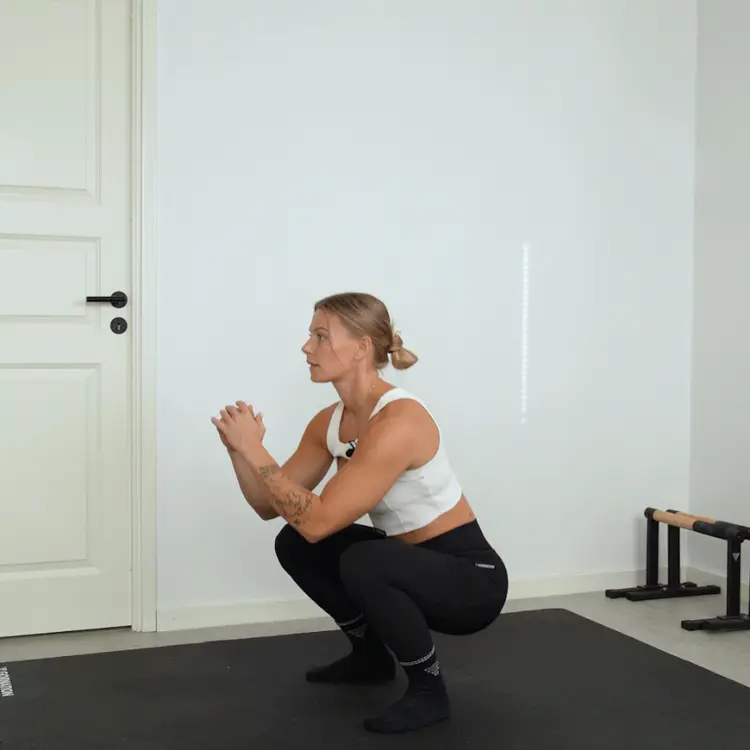
Lowered position in a bodyweight squat
Reference photographDanielflefil ↗ · CC BY-SA 4.0Real movement or context photo. Some families share a reference; follow the drill’s written instructions. Image resized.
Watch the real movementClip from the same source · CC BY-SA 4.0 · converted from GIF to MP4.
Strength · No equipment

Bodyweight squat

Build lower-body strength and control.

2 sets8–12Rest 60 s
  1. Stand with feet at a comfortable width and brace gently.
  2. Sit between your hips with heels grounded and knees following your toes.
  3. Rise smoothly; choose a depth you can control.

Use a chair target to make the depth repeatable.
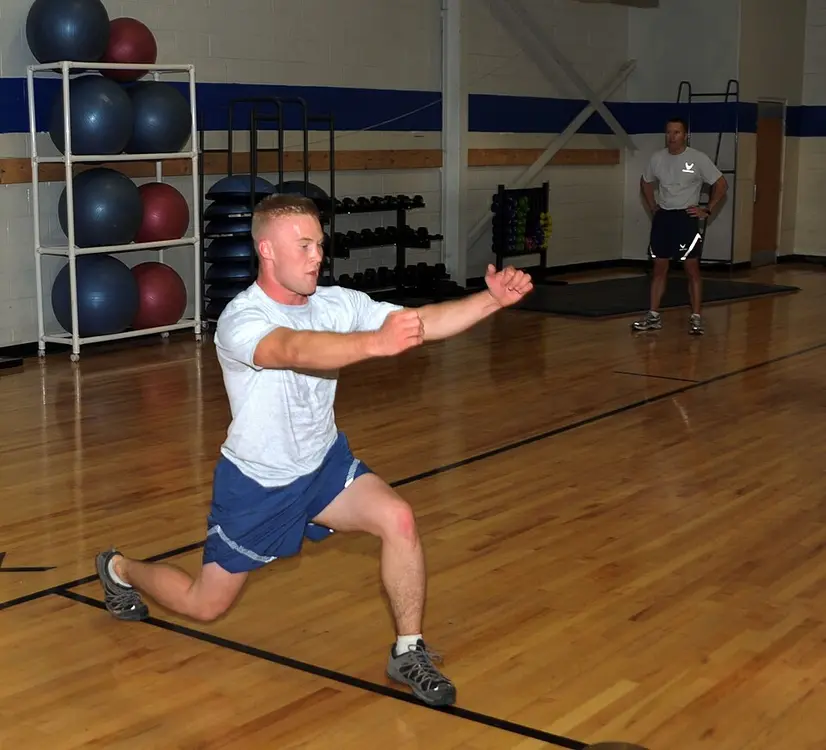
Lunge exercise in a gym
Reference photographU.S. Air Force photo by Senior Airman Myles Stepp ↗ · Public domainReal movement or context photo. Some families share a reference; follow the drill’s written instructions. Image resized.
Strength · No equipment

Split squat

Develop strength in a staggered stance.

2 sets6–8 / sideRest 60 s
  1. Place one foot forward and the other behind, with room between your feet.
  2. Lower the back knee while keeping the front foot fully grounded.
  3. Push through the front foot to rise; repeat on the other side.

Hold a stable support if balance limits the movement.

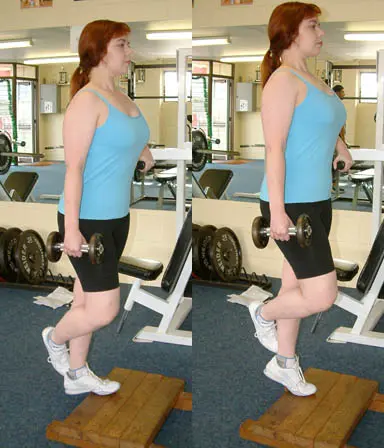
Two positions in a calf raise
Reference photographNo machine-readable author provided. GeorgeStepanek assumed (based on copyright claims). ↗ · CC BY-SA 3.0Real movement or context photo. Some families share a reference; follow the drill’s written instructions. Image resized.
Strength · No equipment

Calf raise

Train ankle push-off control.

2 sets10–15Rest 45 s
  1. Stand tall with light support available.
  2. Lift both heels without rolling the ankles outward.
  3. Pause briefly and lower slowly.

Start without the weights shown in the reference photo.

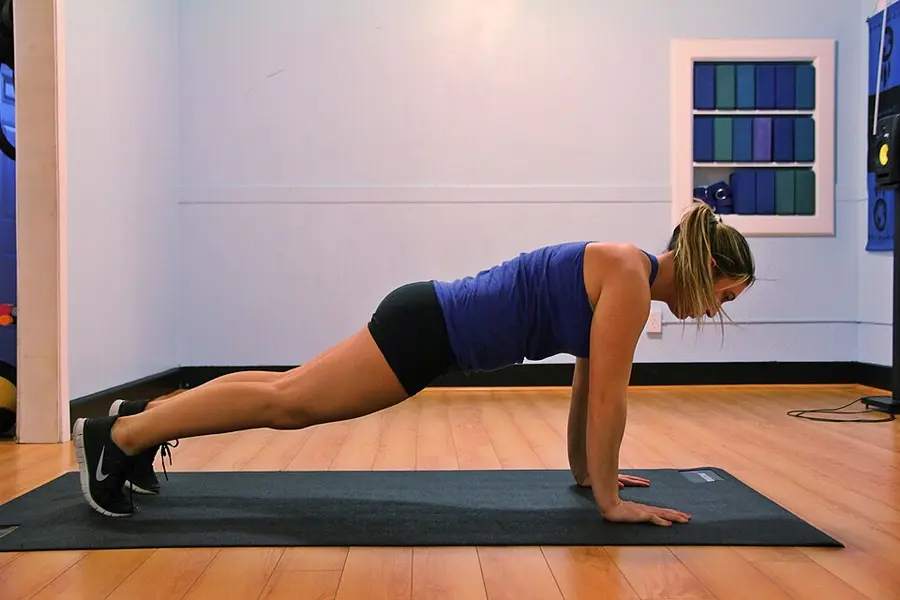
High plank exercise
Reference photographJaykayfit ↗ · CC BY-SA 3.0Real movement or context photo. Some families share a reference; follow the drill’s written instructions. Image resized.
Trunk · No equipment

High plank

Maintain trunk position under a supported load.

2 sets20–30 sRest 45 s
  1. Place hands under shoulders and step the feet back.
  2. Keep head, ribs and pelvis aligned.
  3. Breathe normally and finish the hold before alignment is lost.

Place hands on a bench to reduce difficulty.

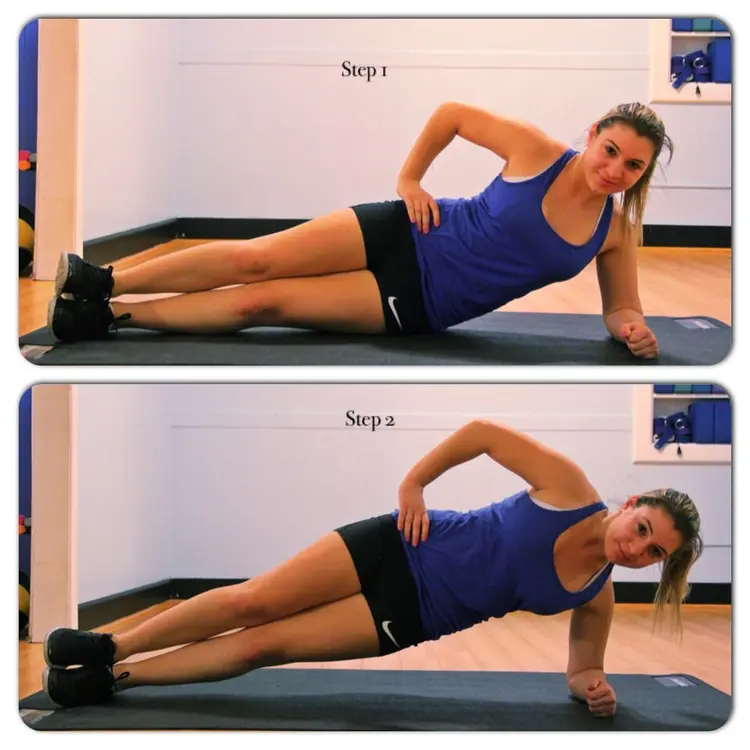
Side plank positions
Reference photographJaykayfit ↗ · CC BY-SA 3.0Real movement or context photo. Some families share a reference; follow the drill’s written instructions. Image resized.
Trunk · No equipment

Side plank

Develop lateral trunk control.

2 sets15–25 s / sideRest 45 s
  1. Place the elbow under the shoulder and stack or stagger the feet.
  2. Lift the hips to align the body.
  3. Hold while breathing, then change sides.

Start with the lower knee on the floor.

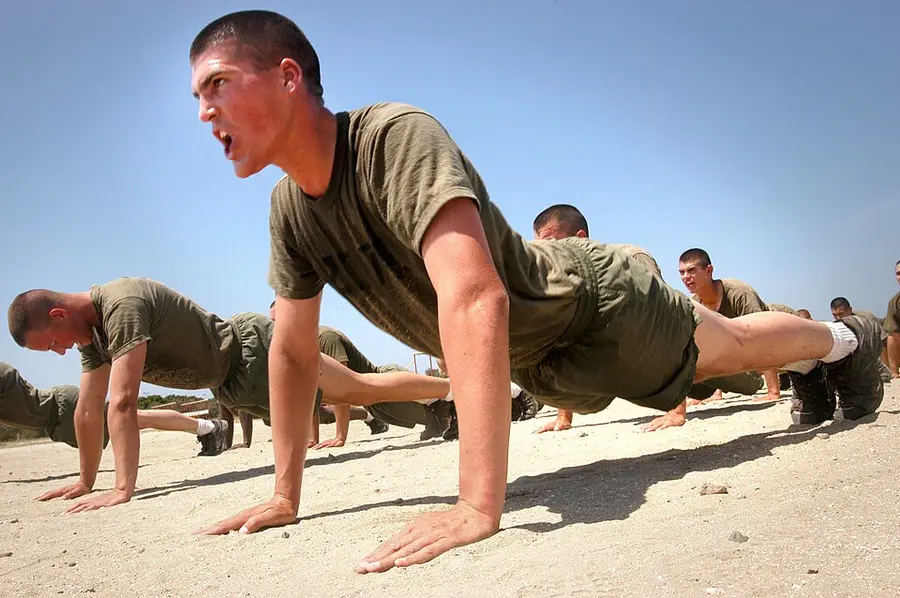
Bodyweight push-ups
Reference photographPFC Charlie Chavez / US Marine Corps ↗ · Public domainReal movement or context photo. Some families share a reference; follow the drill’s written instructions. Image resized.
Strength · No equipment

Push-up

Train upper-body pushing strength.

2 sets6–10Rest 60 s
  1. Place hands slightly wider than shoulders and stabilise the trunk.
  2. Lower the body together with elbows moving diagonally backward.
  3. Press back up without letting the hips sag.

Use a wall or bench when floor repetitions lose control.

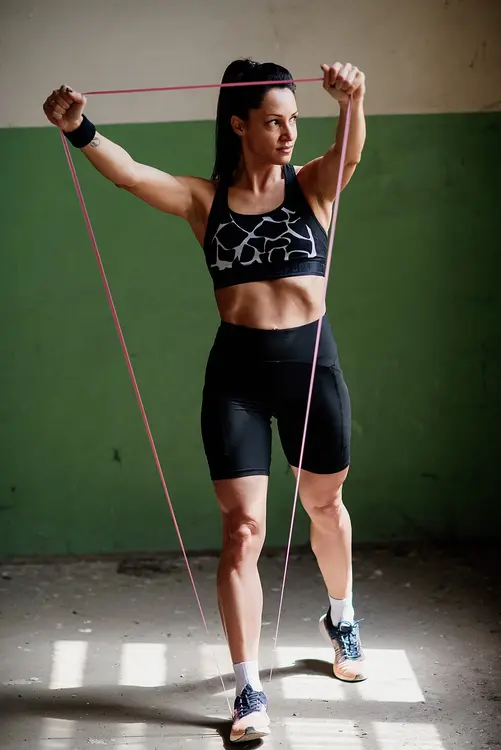
Standing resistance band exercise
Reference photographShixart1985 ↗ · CC BY 2.0Real movement or context photo. Some families share a reference; follow the drill’s written instructions. Image resized.
Strength · Light resistance band

Light band shoulder press

Practise controlled overhead pushing.

2 sets8–10Rest 60 s
  1. Stand on a light resistance band and hold the ends at shoulder height.
  2. Press upward through a comfortable range without arching the back.
  3. Return slowly and keep both sides coordinated.

Use very light resistance; this is controlled strength work.

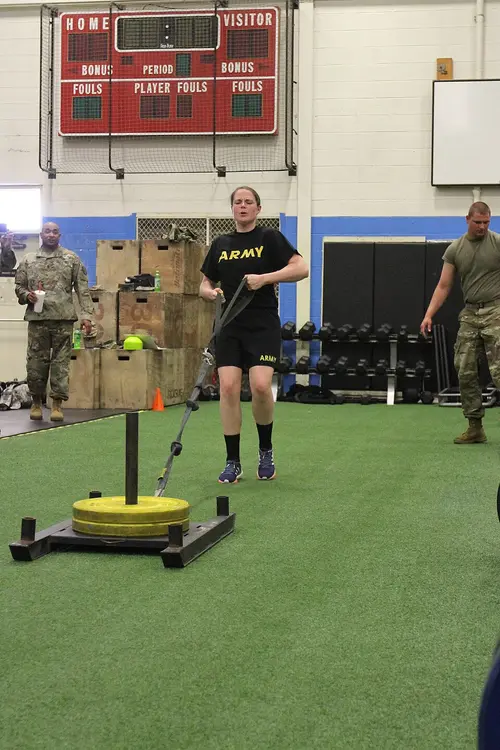
Indoor physical conditioning
Reference photographSteven Stover ↗ · Public domainReal movement or context photo. Some families share a reference; follow the drill’s written instructions. Image resized.
Speed · Floor markers

Short shuttle

Train acceleration and controlled changes of direction.

3 sets3 × 5 mRest 60 s
  1. Mark two lines five metres apart and clear the lane.
  2. Accelerate to the far line, lower the hips and turn under control.
  3. Run back, turn and finish at the far line; alternate the turning side.

The photo shows conditioning context; no sled is needed for this drill.

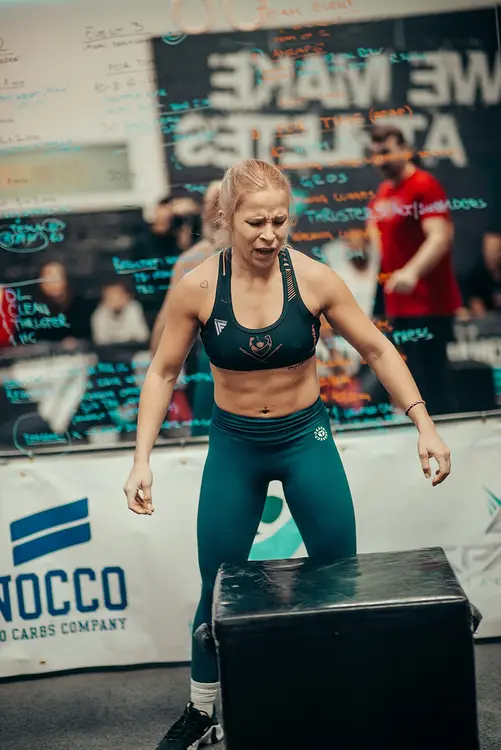
Athlete preparing a box jump
Reference photographShixart1985 ↗ · CC BY 2.0Real movement or context photo. Some families share a reference; follow the drill’s written instructions. Image resized.
Power · Low box

Low box jump

Practise a crisp take-off and stable landing.

3 sets3Rest 75 s
  1. Choose a stable low box and a clear landing area with your coach.
  2. Use a small countermovement and jump onto the box.
  3. Land softly, hold the position, then step down.

Quality first: stop the set when landings become noisy or unstable.

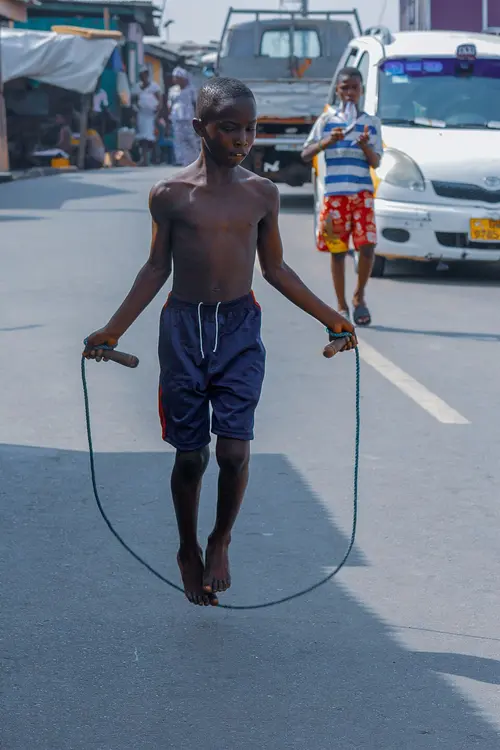
Skipping rope exercise
Reference photographPambelle12 ↗ · CC BY-SA 4.0Real movement or context photo. Some families share a reference; follow the drill’s written instructions. Image resized.
Capacity · Skipping rope

Skipping rhythm

Develop repeated low-amplitude foot contacts.

3 sets20–30 sRest 45 s
  1. Adjust the rope and stand on an even surface.
  2. Make small hops with relaxed shoulders and turns from the wrists.
  3. Maintain a comfortable rhythm and stop at the planned interval.

Begin with simulated rope turns if coordination is difficult.

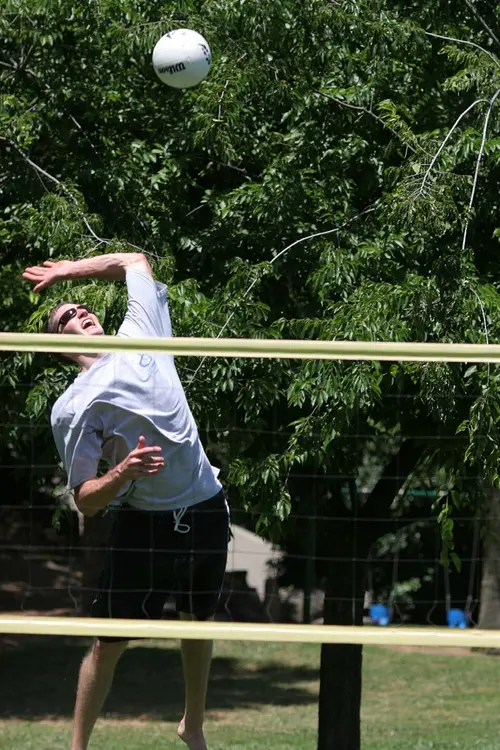
Volleyball player spiking
Reference photographdruchoy / Andrew Choy ↗ · CC BY-SA 2.0Real movement or context photo. Some families share a reference; follow the drill’s written instructions. Image resized.
Power · No equipment

Approach jump with a stable landing

Connect volleyball approach rhythm to a controlled jump.

3 sets3Rest 75 s
  1. Mark a short approach lane with enough landing space.
  2. Build the approach rhythm, plant and jump without a ball.
  3. Land on both feet and hold before walking back.

Use a submaximal jump first; add height only when landing stays stable.

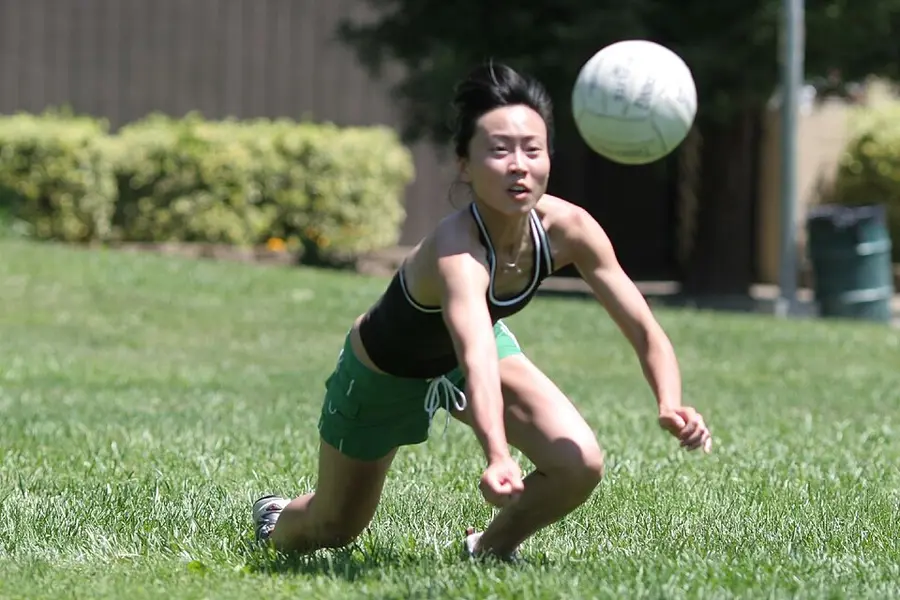
Player digging a low volleyball
Reference photographdruchoy / Andrew Choy ↗ · CC BY-SA 2.0Real movement or context photo. Some families share a reference; follow the drill’s written instructions. Image resized.
Speed · Floor markers

Defensive lateral shuffle

Develop controlled lateral movement from a ready stance.

3 sets10–15 sRest 45 s
  1. Mark a short lane and start in a comfortable defensive stance.
  2. Push from the outside foot and move sideways without crossing the feet.
  3. Brake at the marker and return while keeping the chest available to play.

Keep the lane short enough to preserve posture.

Starting volumes for the coach to adapt to age, level and weekly load. Warm up before the session. Photos show a movement or training reference; the written cues define the NOMVEX variation.

FIVB education resources ↗
Volleyball Physical Conditioning | NOMVEX | Nomvex Volleyball