Skip to content
NOMVEX CONDITIONING · MEDICINE-SLAM

Medicine-ball overhead lift

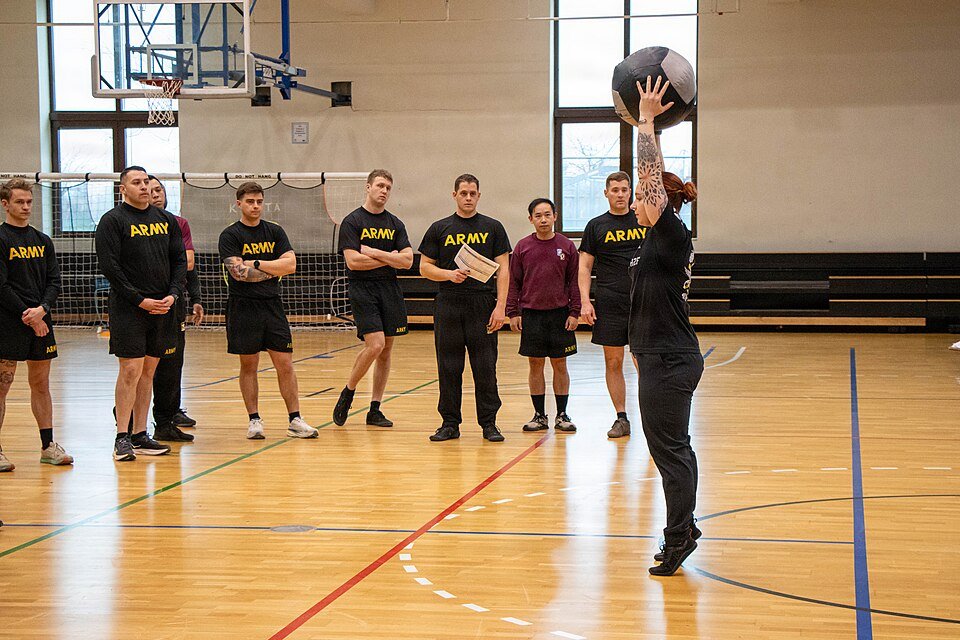
From a balanced standing stance, lift a light medicine ball overhead with arms extended under control. This photo does not show a downward slam.

One authentic reference photo of the base movement plus three progressively harder session protocols. All levels reuse the same movement photograph — no fake independent actions or image claims.

Your exercise in three steps

Medicine-ball overhead lift

Medicine-ball overhead lift
Medicine-ball overhead lift — PREPARATIONMedicine ball1PREPARATIONMedicine ballMedicine-ball overhead lift — EXECUTIONFrom a balanced standing stance, lift a light medicine ball overhead with arms extended under control. This photo does not show a downward slam.2EXECUTIONFrom a balanced standing stance, lift alight medicine ball overhead with armsextended under control. This photo doesnot show a downward slam.Medicine-ball overhead lift — CHECKRepetition depth, limb alignment and movement speed remain consistent.3CHECKRepetition depth, limb alignment andmovement speed remain consistent.

Three vector instruction panels for offline use. The reference photograph is not included.

Medicine-ball overhead lift
Authentic source photo of the base movement, shown uncropped. · U.S. Army photo by Staff Sgt. Samantha Lewis · Public domain
COACH EXECUTION CARD

Medicine-ball overhead lift

Equipment shown or used: Medicine ball

Age: U18 and seniors only (loaded or high-impact)

Exercise setup and mechanics:

From a balanced standing stance, lift a light medicine ball overhead with arms extended under control. This photo does not show a downward slam.

Conditioning relevance to volleyball:

Upper-body and trunk control before progressing to explosive throwing drills.

Physical conditioning supports an athlete’s capacity. It is not a disguised serve receive, attack, defense or blocking skill.

TRAINING PROGRESSION · 3 LEVELS

Progressive practice without inflating exercise numbers

Move up only when execution meets the quality checks. Real readiness and technique matter more than a nominal age category.

01 · Technique foundation

Learn movement control

Suggested starting dose

2 sets × 6–8 controlled repetitions per side where applicable

Rest

60–90 seconds between sets

Coaching cue

From a balanced standing stance, lift a light medicine ball overhead with arms extended under control. This photo does not show a downward slam.

Quality gate

Repetition depth, limb alignment and movement speed remain consistent.

02 · Strength / capacity development

Build repeatable capacity

Suggested starting dose

3 sets × 6–10 technically consistent repetitions

Rest

90–120 seconds between sets

Coaching cue

From a balanced standing stance, lift a light medicine ball overhead with arms extended under control. This photo does not show a downward slam.

Quality gate

Repetition depth, limb alignment and movement speed remain consistent.

03 · Sport-specific workload

Apply controlled sport intensity

Suggested starting dose

3–4 sets × 4–6 challenging but controlled repetitions

Rest

2–3 minutes between sets

Coaching cue

From a balanced standing stance, lift a light medicine ball overhead with arms extended under control. This photo does not show a downward slam.

Quality gate

Repetition depth, limb alignment and movement speed remain consistent.

SAFETY & INDIVIDUALIZATION

Quality first, not maximum load

External loading requires appropriate technique, equipment, experienced supervision and a player-specific plan. Never test maximal loads in an unsupervised youth session.

Doses are coaching examples, not individual prescriptions. Adapt for readiness, fatigue, injuries and any relevant medical advice.

Nomvex Volleyball