Skip to content
NOMVEX · Physical preparation · VB-EX-3366

Single-Leg Balance & Stabilization · Resistance Bands

Reacting to an auditory whistle trigger

This is a progression constraint of an existing setup, not a separate exercise with a new photo.

Your exercise in three steps

Single-Leg Balance & Stabilization · Reacting to an auditory whistle trigger
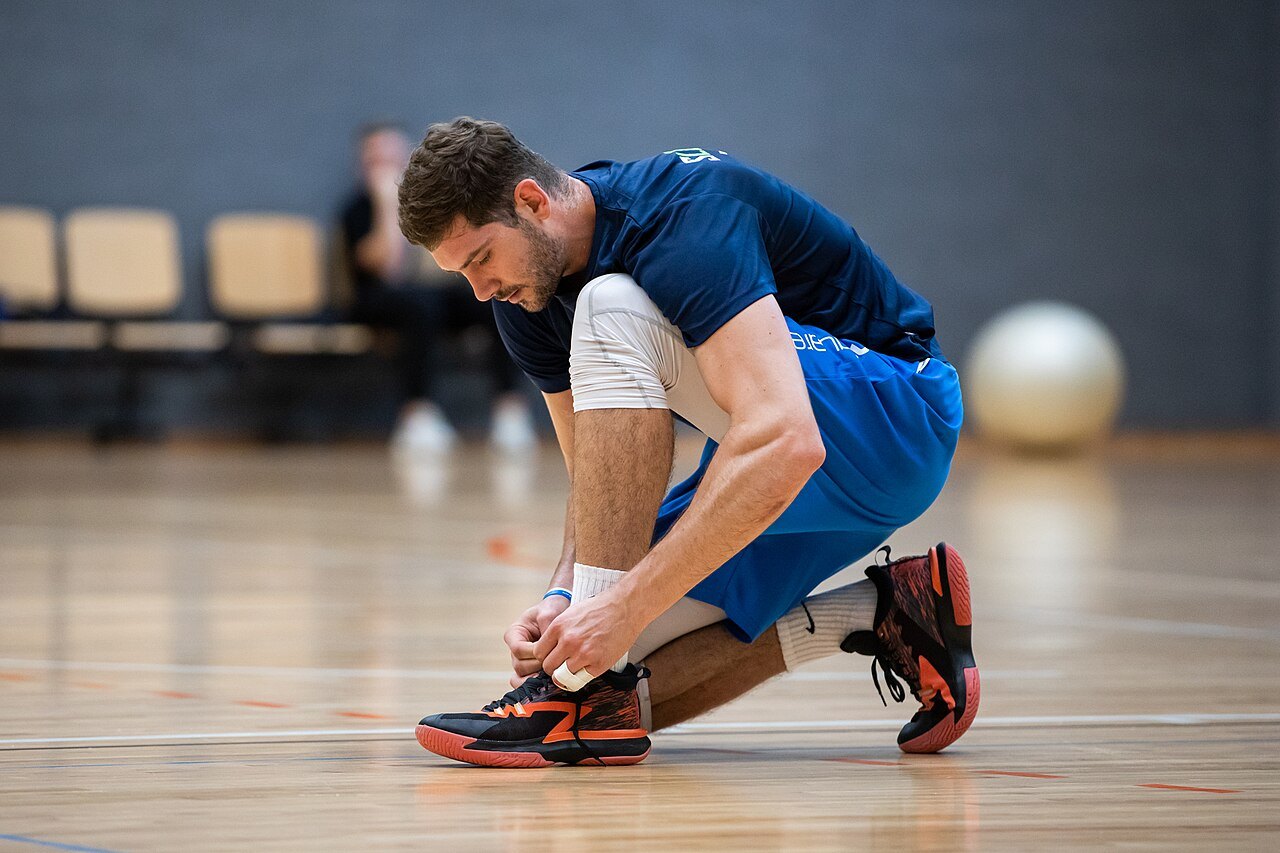
Original volleyball-practice photograph illustrating related training context for Single-Leg Balance & Stabilization. The prescribed Resistance Bands equipment is not necessarily shown.
Original volleyball-practice photograph illustrating related training context for Single-Leg Balance & Stabilization. The prescribed Resistance Bands equipment is not necessarily shown.Context photo: exact correspondence with this movement still needs review. Follow the drill instructions. · Vlada Republike Slovenije from Ljubljana, Slovenia · Public domain

Context photo; the steps describe this exercise.

Single-Leg Balance & Stabilization · Reacting to an auditory whistle trigger — PREPARATIONStable surface with a support nearby for inexperienced athletes. Anchor the band securely and check wear before beginning; choose low tension.1PREPARATIONStable surface with a support nearby forinexperienced athletes. Anchor the bandsecurely and check wear before beginning;choose low tension.Single-Leg Balance & Stabilization · Reacting to an auditory whistle trigger — EXECUTIONStand on one leg with level pelvis and knee over toes. Reach forward or laterally without collapsing into the support leg. Return under control; repeat on the other side. Start only after the signal, but retain visual ball tracking and a safe stopping distance.2EXECUTIONStand on one leg with level pelvis andknee over toes. Reach forward or laterallywithout collapsing into the support leg.Return under control; repeat on the otherside. Start only after the signal, butretain visual ball tracking and a safestopping distance.Single-Leg Balance & Stabilization · Reacting to an auditory whistle trigger — CHECKStable foot tripod and level pelvis.3CHECKStable foot tripod and level pelvis.

Three vector instruction panels for offline use. The reference photograph is not included.

Original volleyball-practice photograph illustrating related training context for Single-Leg Balance & Stabilization. The prescribed Resistance Bands equipment is not necessarily shown.
Original volleyball-practice photograph illustrating related training context for Single-Leg Balance & Stabilization. The prescribed Resistance Bands equipment is not necessarily shown.Context photo: exact correspondence with this movement still needs review. Follow the drill instructions. · Vlada Republike Slovenije from Ljubljana, Slovenia · Public domain

Base skill reference, not an exact illustration of this individual progression.

COACH EXECUTION CARD

Practical on-court execution

Starting coaching cues to adapt for player level, squad size and readiness.

01 · Purpose

Technical / tactical target

Maintain control of pelvis and knee during unilateral volleyball movements.

02 · Setup

Court and equipment

Stable surface with a support nearby for inexperienced athletes.

Anchor the band securely and check wear before beginning; choose low tension.

03 · Execution

Progressive steps

  1. Stand on one leg with level pelvis and knee over toes.
  2. Reach forward or laterally without collapsing into the support leg.
  3. Return under control; repeat on the other side.
04 · Applied progression

Reacting to an auditory whistle trigger

Start only after the signal, but retain visual ball tracking and a safe stopping distance.

No separately verified photograph exists for this constraint. See the parent setup reference image.

Suggested dose

3 sets × 20 seconds per side or 6 reaches.

Success criterion

Stable foot tripod and level pelvis.

Safety and adaptation

Remove unstable or loaded variations when balance is poor.

Nomvex Volleyball