Skip to content
NOMVEX · Warm-up · VB-EX-0040

Dynamic Mobility · Resistance Bands

Transitioning from base defense position

This is a progression constraint of an existing setup, not a separate exercise with a new photo.

Your exercise in three steps

Dynamic Mobility · Transitioning from base defense position
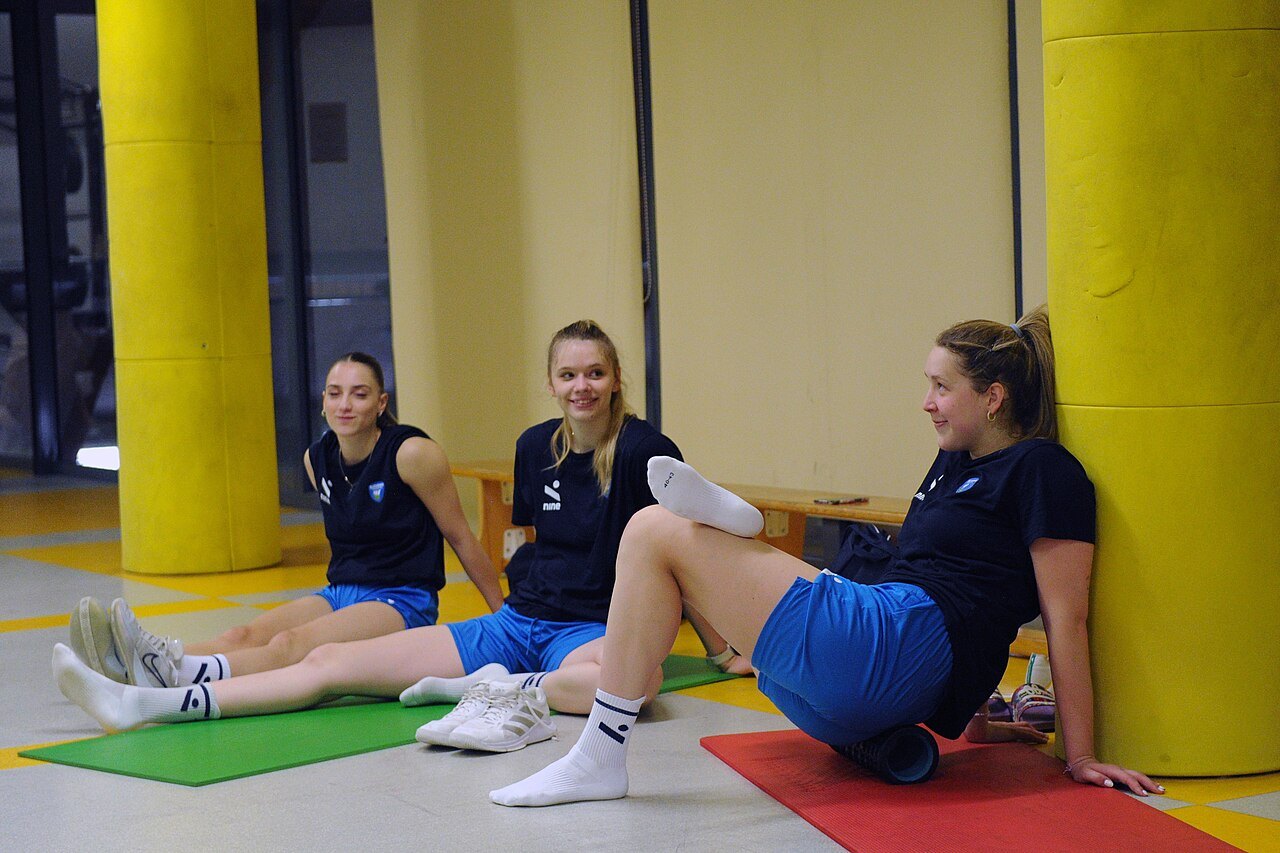
Original volleyball-practice photograph illustrating related training context for Dynamic Mobility. The prescribed Resistance Bands equipment is not necessarily shown.
Original volleyball-practice photograph illustrating related training context for Dynamic Mobility. The prescribed Resistance Bands equipment is not necessarily shown.Context photo: exact correspondence with this movement still needs review. Follow the drill instructions. · Odbojkarska zveza Slovenije from Slovenia · Public domain

Context photo; the steps describe this exercise.

Dynamic Mobility · Transitioning from base defense position — PREPARATIONMark a clear 4–6 m lane and a safe turning zone. Anchor the band securely and check wear before beginning; choose low tension.1PREPARATIONMark a clear 4–6 m lane and a safe turningzone. Anchor the band securely and checkwear before beginning; choose low tension.Dynamic Mobility · Transitioning from base defense position — EXECUTIONStart with controlled walking lunges and ankle/hip mobilization. Add a short shuffle, stop and re-accelerate without crossing feet. Finish with volleyball-ready split-step and a controlled reception base. Begin in defensive position and link the first movement to a simulated rally cue.2EXECUTIONStart with controlled walking lunges andankle/hip mobilization. Add a shortshuffle, stop and re-accelerate withoutcrossing feet. Finish withvolleyball-ready split-step and acontrolled reception base. Begin indefensive position and link the firstmovement to a simulated rally cue.Dynamic Mobility · Transitioning from base defense position — CHECKQuiet landings and balanced foot contact through every change of direction.3CHECKQuiet landings and balanced foot contactthrough every change of direction.

Three vector instruction panels for offline use. The reference photograph is not included.

Original volleyball-practice photograph illustrating related training context for Dynamic Mobility. The prescribed Resistance Bands equipment is not necessarily shown.
Original volleyball-practice photograph illustrating related training context for Dynamic Mobility. The prescribed Resistance Bands equipment is not necessarily shown.Context photo: exact correspondence with this movement still needs review. Follow the drill instructions. · Odbojkarska zveza Slovenije from Slovenia · Public domain

Base skill reference, not an exact illustration of this individual progression.

COACH EXECUTION CARD

Practical on-court execution

Starting coaching cues to adapt for player level, squad size and readiness.

01 · Purpose

Technical / tactical target

Increase useful movement range before footwork, reception or jumping.

02 · Setup

Court and equipment

Mark a clear 4–6 m lane and a safe turning zone.

Anchor the band securely and check wear before beginning; choose low tension.

03 · Execution

Progressive steps

  1. Start with controlled walking lunges and ankle/hip mobilization.
  2. Add a short shuffle, stop and re-accelerate without crossing feet.
  3. Finish with volleyball-ready split-step and a controlled reception base.
04 · Applied progression

Transitioning from base defense position

Begin in defensive position and link the first movement to a simulated rally cue.

No separately verified photograph exists for this constraint. See the parent setup reference image.

Suggested dose

2 rounds × 45–60 seconds per pattern; easy to moderate effort.

Success criterion

Quiet landings and balanced foot contact through every change of direction.

Safety and adaptation

Do not force end-range mobility or add jumping before readiness.

Nomvex Volleyball