Reaction & Vision Readiness · Sensor Lights
One training setup with one reference photo and grouped progressions.
Your exercise in three steps
Reaction & Vision Readiness · Sensor Lights
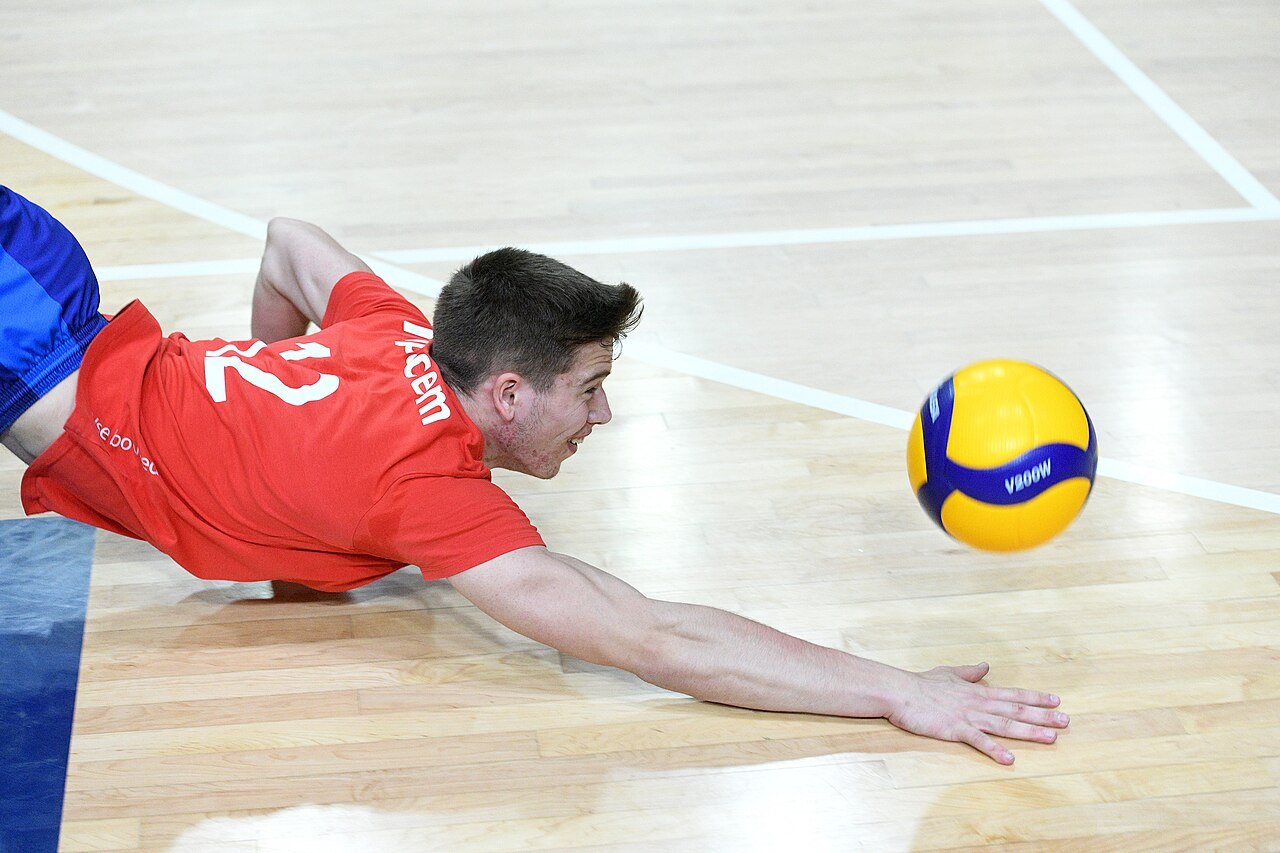
Context photo; the steps describe this exercise.
Three vector instruction panels for offline use. The reference photograph is not included.
Real volleyball-practice reference photograph. The optional equipment may not be pictured; follow the exact setup instructions below.
Reaction & Vision Readiness
Make the first movement respond to actual ball or setter information.
Equipment: Sensor Lights
Position lights as readable cues; never force a collision-prone sprint.
12 progression variations available
Practical on-court execution
Starting coaching cues to adapt for player level, squad size and readiness.
Technical / tactical target
Make the first movement respond to actual ball or setter information.
Court and equipment
Use three visible targets in the backcourt and one caller.
Position lights as readable cues; never force a collision-prone sprint.
Progressive steps
- Observe the caller or ball while maintaining defensive base.
- Move on the signal, not before, with a single decisive first step.
- Stop at target and make a controlled volleyball contact where possible.
4 series × 6 varied cues with a short reset.
No false starts and no crossed approach lanes.
Keep targets within safe deceleration distance.
Progressions of this setup
Each link changes a constraint within this same exercise. Variations do not create duplicate photograph cards or inflate the setup count.
From stationary position
View progression instructions →02 · VB-EX-1698Following a rapid lateral shuffle
View progression instructions →03 · VB-EX-1699Immediately after an emergency sprawl
View progression instructions →04 · VB-EX-1700Under simulated high cardiovascular fatigue
View progression instructions →05 · VB-EX-1702Reacting to an auditory whistle trigger
View progression instructions →06 · VB-EX-1703Moving backwards away from the net
View progression instructions →07 · VB-EX-1704Transitioning from base defense position
View progression instructions →08 · VB-EX-1705Focusing on blind spots / Zones 1 and 5
View progression instructions →09 · VB-EX-1706Alternating target positions consecutively
View progression instructions →10 · VB-EX-1707Using a rapid-fire double feed sequence
View progression instructions →11 · VB-EX-1708Maintaining a low body center of gravity
View progression instructions →12 · VB-EX-1709Following a 180-degree quick pivot turn
View progression instructions →